In e-commerce, online store performance optimization is one of the main factors of success. Page loading speed, intuitive navigation and reliability are factors that can significantly affect the user experience and, in consequence, your sales results. If your online store is slow or has functional problems, potential customers may quickly abandon their purchase and move on to the competition. That is why it is worth understanding what to do to optimize the performance of your e-store and give customers the best possible experience. In this article we present the most important aspects of performance optimization along with practical tips that will help you achieve better results.
Table of contents
Why online store performance matters
The speed and reliability of an online store have a direct impact on the user experience. Research shows that even a delay of one or two seconds in page loading can lead to a significant drop in conversions. Customers expect instant access to information and products. If your site is slow, you risk losing not only potential sales, but also customer loyalty. On top of that, site performance affects your ranking in search results, which is crucial for visibility online.
In addition, with the growing role of mobile devices, users often browse online stores from a variety of platforms. Responsiveness and loading speed on smartphones and tablets are just as important as on desktop computers. A slow site can discourage a mobile user even faster, because of connection limits and less patience. As a result, investing in performance optimization translates into better business results and a competitive edge.
Analyzing current performance
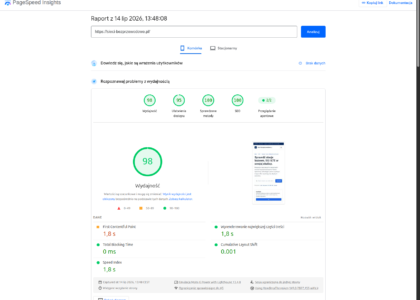
Before you start optimizing, it is worth running a thorough analysis of the store’s current performance. Tools such as Google PageSpeed Insights, GTmetrix or Pingdom can provide valuable information about the areas that need improvement. This analysis will help you identify the elements that weigh the page down the most, such as unoptimized images, too many scripts or inefficient code.
It is also worth paying attention to metrics such as Time to First Byte (TTFB), First Contentful Paint (FCP) and Largest Contentful Paint (LCP). These metrics will help you understand how quickly users see content on your site and how long they have to wait for it to load fully. Monitoring them regularly lets you react to any problems as they appear.
At this stage it is also worth considering a professional website audit, which will point out specific areas to optimize. Experts can help identify less obvious problems, such as server configuration errors or inefficient database queries.
Optimizing code and assets
Code optimization is one of the most important steps in improving the performance of an online store. It covers minifying CSS and JavaScript files, removing unnecessary comments and whitespace, and eliminating unused code. Compressing images and using modern formats such as WebP can significantly reduce page size. It is also worth implementing caching mechanisms that speed up loading for returning users.
In addition, pay attention to the plugins and extensions you use. Some of them can burden the site and slow it down. Regular updates and removing add-ons you do not need will keep the store in good shape. Optimizing database queries and indexing tables can also help increase the speed of the site.
If you need professional help in this area, consider using software development services, which will let you adapt the store to your individual needs and increase its performance. Specialists can propose custom solutions that are not only fast, but also scalable as your business grows.
Choosing the right hosting
Hosting plays a key role in the performance of an online store. Choosing the right provider and hosting plan can significantly affect page loading speed. Make sure your hosting offers sufficient resources, such as RAM and processor power, and that it supports the latest server technologies. Also consider using a CDN (Content Delivery Network), which will speed up content delivery to users all over the world.
Hosting security matters just as much. DDoS attacks and other threats can not only slow the site down, but also put your customers’ data at risk. When choosing hosting, check whether it offers advanced protection and regular backups.
If you are not sure which hosting will be best for your store, take a look at the offer of professional website and email hosting, which will provide both speed and reliability. Well-chosen hosting is an investment that pays off in better performance and greater customer satisfaction.
Monitoring and continuous improvement
Performance optimization is an ongoing process. Regular monitoring of site parameters lets you react quickly to problems as they arise. Use analytics tools to track user behavior and site performance. Keep the store software updated and take care of security to avoid potential threats that could affect how it works.
It is also worth collecting feedback from customers. Their comments can point to areas that need improvement. Is the site slow at certain hours? Are there problems with specific features? Listening actively to users lets you adapt to their needs and increase their satisfaction.
Do not forget about A/B testing. Experimenting with different elements of the site can help you find the optimal solutions in terms of both performance and conversion. Continuous improvement is the key to keeping a competitive edge in the fast-changing e-commerce environment.
To sum up, online store performance optimization is essential for success in e-commerce. By investing time and resources in improving the speed and functionality of your site, you increase customer satisfaction and your chances of higher sales. In a time of growing competition and changing user expectations, you cannot afford to neglect this aspect.
If you need professional support in this area, we encourage you to get in touch with us. Our experts will help you implement the best solutions tailored to your needs. Together we can make your online store work faster, more efficiently and deliver better results.