WordPress optimization comes down to a few steps that speed up page loading: analyze the site’s performance, choose good hosting, optimize images and scripts, and limit the number of plugins. Loading speed affects both the user experience and search engine rankings, so it is worth treating it as part of any website development plan. In this article we present a complete approach to speeding up WordPress sites, from the basics to more advanced techniques that can noticeably improve the end result.
In today’s digital environment, where every second counts, it pays to invest time and money in tools and well thought out strategies that make fast page loading possible. Users expect instant access to information, and search engines reward sites that meet those expectations. This is why performance analysis and testing are the first step in the optimization process. In the sections that follow we present practical tips that will let every WordPress site owner noticeably improve the speed of their website and gain an edge over the competition.
Table of contents
Website performance analysis - the foundation of WordPress optimization
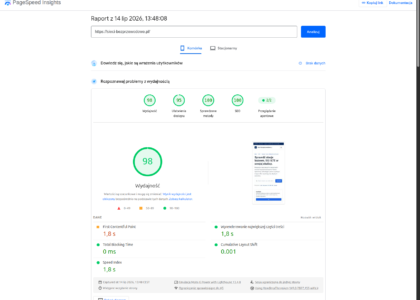
To start the WordPress optimization process, you first need to take a close look at the current performance of your site. Tools such as Google PageSpeed Insights or GTmetrix are worth using here, as they offer a detailed analysis of loading time and identify the elements that need work. Monitoring the results regularly lets you react quickly to any problems and introduce the necessary changes, which is key to keeping the site competitive on the market.
Test results often point to the need to optimize both the code and the media assets that have a significant impact on how fast the site responds. That is exactly why site owners should take corrective action at an early stage. Performance analysis of WordPress sites also gives a better understanding of the areas where the user experience can improve thanks to a shorter loading time. Analytics tools help improve the website in terms of SEO and visitor convenience.
On top of that, applying fixes systematically based on the data you receive makes it possible to build better optimized page structures. It is worth looking at how efficiently individual elements load, from plugins, through JavaScript scripts, all the way to image formats. Focusing on a detailed performance analysis is the foundation that lets you optimize WordPress in a comprehensive and effective way.
Choosing the right hosting and configuring the server
When working on WordPress optimization to speed up page loading, you cannot forget the role of hosting. An efficient server is the basis for fast data processing and it minimizes the delays that come from an overloaded infrastructure. The choice of the best hosting plan should depend on the character and the size of the website. For many users, investing in high quality hosting brings immediate results and keeps the site running smoothly even with a large number of visitors.
Server configuration is another important link in the optimization chain. It is worth considering technologies such as PHP 8, which significantly speed up WordPress based applications. Adjusting the server settings to the specific requirements of the website brings long term benefits. If you are looking for inspiration and support in building WordPress based sites, we encourage you to visit this subpage about WordPress.
In the context of WordPress optimization it is also worth remembering the database configuration and the optimized PHP and web server settings, which can significantly improve the loading speed of your website. Investing in professional hosting and an individual approach to server configuration are steps that, in the long run, raise the comfort of using a blog or an online store.
Optimizing assets and code - from images to plugins
Page loading speed does not depend only on the hardware or the server configuration. Optimizing the individual elements present on the page, such as images, scripts or plugins, matters just as much. Many unnecessary or poorly written scripts can slow the website down considerably. That is why regular analysis and optimization of the code is a key stage in the WordPress optimization process. Well optimized images, compression of CSS and JavaScript files, and the use of lazy loading techniques have a real impact on site performance.
The approach to choosing plugins is just as important. Every extra feature that is not properly optimized can have a negative effect on the loading speed of the website. Reviewing the current add-ons and removing the ones that are not necessary helps a lot here. It is also worth investing in dedicated content caching solutions. Caching techniques let you keep the most frequently used assets in a cache, which shortens the time needed to load them again. If you want to learn more about the best optimization solutions, read our text on how to build efficient and fast websites, where you will find practical advice and examples of technology rollouts.
It is also worth using external technical support sources, such as the official WordPress website, which provides a wealth of information and up to date tools useful in website optimization. Combining various optimization techniques and tools can significantly shorten page loading time, which translates into a better user experience and higher positions in search results.
Practical tips for keeping your site fast
Rolling out an optimization strategy once is not enough. Keeping performance high requires constant monitoring and ongoing updates. Regular reviews and updates of WordPress itself, of themes and of plugins are essential for the stability and security of the website. This process also includes testing new software versions, which often bring performance improvements, and removing unnecessary add-ons. It is also worth taking care of caching system integration and optimized database management, which translates into lower server resource usage.
In the daily work of keeping a website fast, practices such as optimizing images before publication and using modern web technologies are a big help. Long term optimization requires consistency and constant tracking of trends, which makes it possible to roll out new solutions quickly. If your website needs a comprehensive set of improvements, it is worth getting in touch with website development specialists. Investing in professional WordPress based websites or in solutions built by experts can bring measurable benefits within a short time. Adapting optimization strategies to the character of the company translates not only into better speed, but also into more effective marketing and sales campaigns.
Systematic control, analysis and the rollout of modern technologies are the foundation of today’s web solutions. Thanks to them your site will be not only fast and responsive, but also secure and user friendly. Remember that success online requires constant improvement, so it pays to invest regularly in the technical development of your website.
Closing thoughts
WordPress optimization is not only a technical challenge, it is also a chance to improve the user experience and become more competitive on the market. Every site owner should remember that a fast and smoothly running website is the foundation of success online. Using analytics tools, choosing the right hosting and paying attention to every detail at the code level all add up to an effective optimization strategy. Systematic work on performance translates into more visits, higher conversion and better positions in search results. It is also worth drawing on the experience of other experts and on the current resources available online, which helps to adapt the latest technologies to the individual needs of the website.
In practice this means not a one time effort, but continuous care for every aspect of how the site works. The changes you make should be monitored regularly and updated in line with the latest trends in IT and e-commerce. WordPress optimization is a dynamic process that requires flexibility and a willingness to experiment with new solutions. If you want to succeed online and increase your visibility, it is worth applying not only the standard practices, but also looking for innovative ones. We invite you to get in touch and to follow our news, so that you stay up to date with the latest optimization trends that can bring measurable benefits to your website.
We encourage you to share your experiences and opinions about the solutions you put in place. Interacting with other users and with WordPress specialists is one of the best ways to keep improving websites, which helps to build a strong brand and to succeed in online business. Every second counts, and an optimized website is an investment that pays off in the form of higher visitor satisfaction and better sales results.