
Structured data is a way of telling search engines about the content of a web page in an organised, well-defined format. It helps them classify pages better and match them to search queries more accurately.
The most common method is Schema.org, which defines the types of items you can describe. Its schemas cover physical things such as products, people and places, as well as intangible ones such as organisations, concerts and recipes. Each schema is documented in detail at https://schema.org, which states exactly which properties are required and which are optional.
Schema.org is a joint project of the largest search engines: Google, Microsoft, Yahoo and Yandex. So you can be sure that all four of them support schema.org.
What do you gain by implementing these schemas?
When you use a Schema.org schema, search engines can fully understand its key elements. If a page describes a concert, for example, it states exactly where and when it takes place and who is playing.
This lets search engines pull the important details into their results and highlight the most useful information.
Results like these are called “Rich Snippets”. In Poland people often refer to them as “structured data” or “microdata”.
Table of contents
How do you get these “Rich Snippets”?
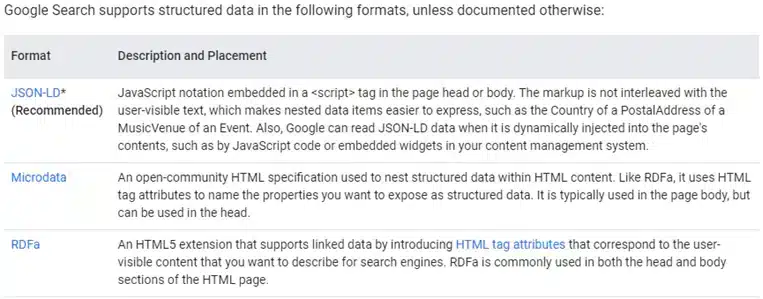
Schema.org offers three ways to implement Rich Snippets:
- Microdata
- RDFa
- JSON-LD
- JSON-LD is a JSON format designed specifically for marking up structured data on a web page.
What does structured data do?
The most common use of structured data is the “breadcrumb”, which shows search engines where a page sits in the structure of a website.
For an online shop, the most important schema is the one used to describe products.
You can find the full product specification at https://schema.org/Product.
The product image shown in mobile search results is not a Rich Snippet. It is a product photo, but Google finds it on the page itself and decides on its own to show it in mobile results.